Showing posts with label archaeology. Show all posts

Wednesday, June 1, 2011

Borden System Words: Ontario

Well here we are making the figurative trek "out East" to check out what kind of words they got out there. We'll just see how well Ontario stacks up against BC's "fart", Saskatchewan's "dink" (heeheehee), and Manitoba's "hell". In the interest of me not really caring to figure it out, I've included all the edge overlap with Quebec and to South (as shown in the image to the right) and they can just fight amongst themselves as to who owns what (we'll cross that bridge when we get to it). Also, remember that I put the Manitoba overlap with Manitoba. Here are Ontario's 54 words (FYI: CJ, CH, DJ, EJ, FJ, GK, and GH had no words):

AH – agha, ache, aahs
AG – alga
BH – baht
BG – bigs, begs, bags
BF – biff, baff
CI – clip, chit, chis, chip, chin, chid, chic, chia, ceil, cain, caid
CG – cage
DI – djin, deil, dais
DH – dahs, dahl
DG – digs, dags, dago
EI – egis, edit
EH – elhi, echo, eche
EG – eggs, edge
FI – flit, flip, flic, fair, fain, fail
FH - fehs
GI – glim, glib, glia, gait, gain
HI – heir, heil, hair, hail, haik

Well, there's an ethnic slur, but that's not really a swear, just offensive, so no good (that one's actually in Quebec). Oh well, we can learn a few new word meanings anyway. For example "agha" is a title of honour in Turkey and other Muslim countries; a "baht" is a monetary unit in Thailand; "cain" is Scots/Irish English in origin and refers to rent paid in kind (instead of money that is, especially a percentage of a farm crop); a "caid" is a Muslim tribal chief (I'm pretty sure I've used that in Scrabble before); "deil" is Scots for a devil or mischievous person; "egis" is another way of spelling "aegis", which refers to protection, support or sponsorship, or being under the auspices of something; "elhi" is an adjective referring to being of or relating to elementary and high school.

Dang it Ontario! You've failed me! But, on the plus side an excerpt from my series of Borden System posts has ended up in the May issue (Vol 32) of the Saskatchewan Archaeological Society newsletter as the article "The Borden System Defined". The article was trimmed from this post. So much fame! I'll try not to let it go to my head.

p.s. This is my second blog-post related article in the SAS newsletter. The last one being from this post about making and excavation screen.

Wednesday, January 13, 2010

Borden System Words: Manitoba

Before we continue in our quest for Borden words let's have a quick Borden system refresher since it's been a little while. If you recall from last time (just click on the "BSwords" tag link at the bottom of this post and all of them will pop up), the upper North-South Borden blocks represent 2 degrees of latitude and the lower N-S Borden blocks within these, each represent 10 minutes. Since 2 degrees = 120minutes, the only lower N-S Borden blocks available are “a” through “l”. The upper East-West Borden blocks represent 4 degrees of latitude (south of 62 degrees), while the lower Borden blocks continue to represent 10minutes each. Since 4 degrees = 240 minutes, the only lower E-W Borden blocks available are “a” through “x”. Remember that? Good! Another good thing to remember is that the Borden blocks are in alphabetical order going from the Southeast of Canada to the North and West, so AA is in the water at the US border south of Newfoundland, while KW is in far Northwestern BC.

Now on to Manitoba and its 57 words. Bear in mind that the ‘M’ East-West Borden block only runs from ‘a’ through ‘j’ in Manitoba (the rest are in Sask.), and the ‘D’ North-South block only runs from ‘g’ through ‘l’ (the rest would’ve been in the U.S. were the Borden system used there). OK let’s see what we’ve got (FYI blocks EM, GK, and GJ had none):
IM – iamb
HM – heme, hame
GM – game, gamb, gama
FM – feme, fame
DM – dime
IL – ills, iglu, idle
HL – hilt, hill, hila, help, helo, helm, hell, held, halt, halo, halm, hall, half, hale
GL – gilt, gill, gild, gelt, gels, geld, gals, gall, gale, gala
FL – fils, filo, film, fill, file, fila, felt, fell, falx, fall
EL – ells, eels
DL – dill
IK – ilks
HK – hike, hake
FK – fake
EK - elks
DK – dike
HJ – hajj, haji

Did you know that a falx refers to a sickle-shaped structure, a fils is a middle eastern fractionary unit of currency, and hajj is a pilgrimage to Mecca? Also, hila is the plural of hilum and refers to the mark or scar on a seed produced by separation from its funicle or the nucleus of a granule of starch.

But it looks like Manitoba gave us a real swear! Hell! Ahhahaha! Wee! Plus, we learned a few new words, which is also good. Go Manitoba! Next we'll look at Ontario...

Monday, January 11, 2010

Cultural evolution in crows?

Crows give chimps a run for their money. That's some smart damn crows!

p.s. another example of smart animal tool use.

Tuesday, December 1, 2009

Borden System Words: British Columbia

BC is a gold mine of good words! Please bare in mind that many of these are probably in the water, especially those with the upper East-West designation (third letter) of V, U, or T. We also still have a few slackers: DQ, EP, EQ, FQ, IV, IU, IT, IS, and IR all have no words and I already used up the words from DP in the Alberta words post. However we still have quite a few:

HU – haut, haul
HT – hits, heth, hats, hath, hate
HS – hiss, hest, hast, hasp, hash
HR – hire, hers, hero, herm, herl, here, herd, herb, hart, harp, harm, harl, hark, hare, hard
GU – glut, glum, glug, glue, geum, gaur, gaud
GT – gits, gets, geta, gats, gate
GS – gist, gest, gast, gasp, gash
GR – girt, giro, girl, gird, germ, gars, garb
FU – flux, flus, flue, flub, feud, faux, faun
FT – fits, fete, feta, fats, fate
FS – fist, fish, fisc, fess, fast
FR – firs, firn, firm, fire, fern, fere, fart, faro, farm, farl, fare, fard
ET – efts, eats
ES – else, east, ease
ER – ecru, ears, earn, earl
DS – diss, disk, dish, disc
DR – dirt, dirk, dire

That's a grand total of 96 potential Borden words! Outstanding! Especially compared to Alberta's abysmal 16 words even after I took out a bunch of the sketchy words that the Scrabble thing churned out and for which I couldn't find any good definitions, like "hets", "hist", "hisn", "hern", "gaun", "fets", and "feus". I also took out a few crazy Scots words like "dirl", "girn", "fash" and "eath"(this is despite certain Diana Gabaldon books that I may or may not have read and from which I learned several of these), and a dialect word or two like "gaum" and "dere". FYI: "heth" is the eighth letter of the Hebrew alphabet, a "herm" is a monument or statue consisting of a four-sided column tapering inward from top to bottom with a bust of Hermes on top, "firn" is granular snow accumulated on high mountains and subsequently compacted into glacial ice (or a field of same). Anyway, BC is good because it has several key dirty (both symbolic and literal) words including "fart" and "germ". Fart is clearly the front runner here so far (much better than Sask/Alberta with "dink". No swears yet though. We'll just see what Manitoba has to say.

Sunday, November 29, 2009

Borden System Words: Alberta

Continuing in our search for filthiness in the Borden System, we move on to Alberta. There's sure to be some bad words in there! What with all the oil rig workers and such. Unfortunately, 1/4 of the upper borden grids have Qs in them! Lousy Qs!

Turns out that Alberta has significantly fewer BSwords than Saskatchewan (IQ, IP, HQ, HO, GQ, FQ, FP, EQ, and EP had no words at all...slackers). Here they are by upper borden block (keep in mind that, as we learned last time, the lower North-South bordens only go up to l and the lower East-West bordens only go up to x, which means we miss out on some good words like "fool" and "grog" and "goon", but no swears though):

IO – ikon, icon
HP – hips, haps
GP – gips, gaps, gape
GO – glow, glop, glom
FO – flow, flop
EO – egos, ebon
DP – dipt, dips
DO – dhow

Bah! I guess glop is good because its literally dirty, but that wasn't what I was going for. Oh well, I'm 0 for 2 so far, but we'll see next time.

p.s. A "dhow" is a traditional Arabic sailing vessel. Learning is fun!

Thursday, November 26, 2009

Borden System Words: Saskatchewan

The Borden System divides Canada up into chunks based on the lat/long system to provide a handy way of designating unique site names based on the site's location and the order in which it was found (just like the Stonecutters!). It was created by one Charles E. Borden in 1952, while teaching at UBC. Borden is known as the grandfather of BC archaeology. This is despite the mild handicaps of having been employed in the German Department (although he was made a lecturer in archaeology after his first 10 years there) and being an American citizen. See a good bio from the CAA here, also American Antiquity printed an obituary for him. His contributions to BC archaeology (and archaeology in general) were numerous. Among other things, he excavated many important sites, was instrumetal in the pressuring of provincial government to pass the 1960 Archaeological an Historic Sites Protection Act, and of course developed the Borden Grid System which all Canadian archaeologists know and enjoy today.

Let's look at how it works shall we? Say we have the site FfNm-1 (that's South Branch House).

"F" is the Major South-North locator. Each North-South block represents 2 degrees of Latitude going from "A" through "U" (no V through Z). While "f" is the Minor South-North locator (the minor blocks for "F" range from "a" through "l"). For both the North-South and East-West, each minor block within a major block represents 10 minutes of latitude or longitude respectively. from south to north (a-l). "N" is the Major East-West Locator. To the South of 62 degrees, each of these blocks represents 4 degrees of Longitude from east to west (A - W). However, North of 62 degrees each major block represents 8 degrees of longitude. FYI: Because the distance between lines of longitude get smaller with increasing latitude, the Borden System changes at 64 degrees north latitude, from a width of 4 degrees of longitude to a width of 8 degrees in order to keep the area within each designate roughly the same. Lastly, "m" is the Minor East-West Locator, each block represents 10 minutes of Longitude from east to west (a - x). North of 62 degrees each minor block represents 20 minutes of longitude. The full Borden designation, FfNm-1, represents a roughly 16km x 16km area and the 1st site found within that area. Upper Borden grid maps are downloadable at the Canadian Museum of Civilization here.

Now rumour has it that Charles Borden went to great lengths to prevent cussin' via archaeology in his system and hence omitted several key potential Borden designations. That sounded like a challenge to me....

So, Saskatchewan (see the upper Borden grid to the right, click to embiggen) includes these Borden letters:
North/South - D(g-l), E(a-l), F(a-l), G(a-l), H(a-l), I(a-l)
East/West - O(a-l), N(a-x), and M(k-x).

With quick use of a scrabble cheating device (here), I found that the following 51 words can be spelled using the Borden system in Saskatchewan:

dims, dine, ding, dink, dins, dint, diol, elms, fane, fang, fano, fans, fems, fend, fens, feod, find, fine, fink, fino, fins, floc, floe, flog, gamp, gams, gane, gang, gaol, gems, gene, gens, gent, genu, gimp, gink, gins, glob, hams, hand, hang, hank, hant, hemp, hems, hens, hent, hind, hins, hint, idol

I guess "dink" is kinda dirty and "gink" is a slang word for a person or fellow that is often used in a derogatory context. Also, a "gamp" is an umbrella. It's not dirty, I just didn't know that before. Anyway, as it stands Saskatchewan is clean as a bean. You win this round Charles! Nonetheless, I remain undaunted in my task and will continue to scour Canada province by province for giggle worthy words!

p.s. I wonder if french words count if they're in Quebec.

Saturday, October 31, 2009

Animal Mummies

National Geographic has recently published an interactive article about Egyptian animal mummies. Interactive articles...they teach you while you learn! Hurray! Also, it has a lot of interesting tidbits like how the Egyptian Museum of Cairo's artifact ID numbers all begin with the letters CG. Did you know that hundreds of thousands on mummified cats were hauled from a mass grave near the village of Istabl Antar since their discovery in 1888. They were used as fertilizer in England. Much like the innumerable quantities of bison bones from mass kills here...but I digress. Besides that's all behind us now and current research is using these amazing specimens as windows into daily life in ancient Egypt, employing zooarchaeology (of course), experimental archaeology, and advanced imaging techniques to examine what species were present, their uses, and how the mummies were created (among other things). Cool beans!

The Egyptologist and zooarchaeologist featured in the National Geographic article is Dr. Salima Ikram, a professor of Egyptology at the American University at Cairo. In the following video from this article at Heritage Key, she explains some of her work.

Super fun Halloween bonus references (oooo scary!):
-Herodotus explains mummification
-The Apis bull and associated cult explained at the Virtual Egyptian Museum (see image to the right)

Tuesday, August 11, 2009

The Chickens! How to Guide (vol.4): Making an Excavation Screen

I drew up some plans for some large excavation screens I made. I went uber-low tech and drew them in Paint too (it's easier than you'd think once you figure out your scale lines). The plans are also in the latest issue of the SAS Newsletter so they're even published (kind of). The reason I put these up here is because my first instinct when I was going to build new screens was to look for wood working plans on the interwebs. But to no avail because the best I could do was a plan for a tank-like shaker screen (but I wanted ones to be hung from from a tripod, hammock style from two trees, or what have you). So I thought I would do my social duty and post my plans here for other archaeology types to try (click to embiggen). They also work for geology soil sifters or compost sifters. Hey and if anyone out there downloads/uses the plans please leave a comment, I'd be interested to know if my social work was useful.

p.s. I put metric measurements because I don't care what the lumber industry says dang it (What are we? In the time of Charlemagne!?). But, since board types are named for their imperial height and width measurements (and S4S boards are subsequently finished to slightly less than that), you can check the "Did You Know?" box for S4S board dimension conversions.

Sunday, August 9, 2009

Chickens! Cultural Moment: Midsummer Night's Dream

Part 2 of this year's Shakespeare on the Saskatchewan festivities. One of the most commonly performed comedies of all time is Midsummer Night's Dream. It is not really known when exactly this play was first written but it was probably some time in the mid 1590's. The SotS took a 20s(ish) take on it with colourful suits and jazzy songs and all of the characters were in the military. Delightful.

This play features three interlocking plots sandwiched between opening and closing scenes relating to the celebration of the wedding of Theseus of Athens and the Amazonian queen Hippolyta. Primarily, we have the love quadrangle between Hermia, Lysander, Helena, and Demetrius. Hermia and Lysander are in love but Hermia's father Egeus wants her to marry Demetrius. Demetrius loves Hermia but she doesn't love him and Hermia's best friend Helena loves Demetrius but he doesn't love her. What jolly farce! We also have the story of Oberon and Titania, the fairy king and queen. They are in town for Theseus and Hippolyta's wedding but are estranged because Titania won't give her page-boy to Oberon to be his minion because the boy is the son of one of her peeps who died. Oberon wants to go upside her head for being so feisty so he gets his henchman Puck to get him a love flower so he can make Titania fall in love with something or other and become too distracted to care about her page-boy any more (and also to be used to sort out the four aforementioned fools who are by now chasing each other through the forest at night). This leads us to the third story, that of the "mechanicals" (laborer/peasant folk) who are to put on the play-within-a-play about Pyramus and Thisbe that is to be the entertainment at Theseus and Hippolyta's wedding. While rehearsing, one of the mechanicals, Nick Bottom, shows himself to be an ass and Puck decides to transform Nick's outsides to reflect this and points him at Titania (who was hepped up on love flower by this point). And bestiality ensued. Eventually, once Oberon gets what he wants, he gets Puck to put everything back to normal except that Demetrius is now in love with Hermia so all is well and all the couples get married and the mechanicals perform their play (badly) and there is much rejoicing. The end.

Now, let's talk historical references shall we:

This play draws on both Greek (Theseus and Hippolyta) and Roman (Pyramus and Thisbe) mythology. He was fathered by the Athenian king Aegeus (as in Aegean Sea, see: Minotaur myth re: throwing himself into the ocean) and Poseidon. Interestingly, this idea reflects the Greek understanding of reproduction at the time as they believed the mixture of semen from the two fathers would give rise to a son with characteristics of both. Theseus is also featured in the lesser known Shakespearean play "The Two Noble Kinsmen". In mythology, Theseus does marry Hippolyta, the Amazonian queen he meets and kidnaps in while traveling with Hercules. However, in some stories it is not Hippolyta, but her daughter Antiope that he abducts and marries. Being an Amazonian gave Shakespeare licence to have Hippolyta talk back to Theseus so forcefully during the play (actually Midsummer Night's Dream is touted as having very strong willed female characters throughout). Anyway, of course this caused a big ol' war between the Amazons and the Athenians. The Amazonians lost because they failed to reckon with the fact the Athenians had two demigods on their side (Duh!). He later ditched Hippolyta (or she may have died) once he became King, for Phaedra who was the daughter of King Minos. Theseus is most famous for defeating King Minos' minotaur in Crete (with Phaedra's older sister Ariadne's assistance) when he was a princely whipper-snapper. But, Phaedra falls in love with her son-in-law Hippolytus, Theseus' son by Hippolyta. In Euripides' play "Phaedra", Phaedra sends her slave to tell Hippolytus how she feels, but he is shocked and appalled by the news (he's chaste don't you know). Phaedra then accuses Hippolytus of rape, Theseus has Hippolytus killed, and Phaedra kills herself not necessarily in that order, and in some versions of the story she doesn't commit suicide at all).

The story of the star-crossed lovers, Pyramus and Thisbe, is from the Roman poet Ovid's epic narrative poem Metamorphoses (the 15 books of this collection of relatively unrelated tales of love, seduction, and history were completed in 8 AD). Among other things, this story explains why mulberries are red. Shakespeare liked this story so much he based Romeo and Juliet on it (which he is thought to have written around the same time as Midsummer Night's Dream). Shakespeare also took the name "Titania" from Metamorphoses, as it was the name given to the daughters of titans. Before this, traditional folklore held that the fairy queen remained nameless. Oberon, however, dates back to 13th century french literature as a fairy dwarf in the "chanson de geste" (transl. Old French - songs of heroic deeds) "Les Prouesses et faits du noble Huon de Bordeaux". As in many fairy tales, this one finds our hero charged with completing various impossible tasks for whatever reason (usually princess related), which he is only able to accomplish because early on in the story he was nice to a magical thing of some sort, in this case a magic dwarf. Other likely candidates for helpful things to befriend in such scenarios include: old people (especially crones), talking animals (also preternaturally smart but mute animals), things that are trapped inside of other things, water creatures that like music (only to be attempted if you have some sort of musical instrument handy), and deceptive earthly incarnations of deities. So keep an eye out for those.

Wednesday, July 29, 2009

Blackfly

The 1991 NFB of Canada animated film based on the song of the same title, written and sung by Canadian folk singer Wade Hemsworth about his personal experience surveying in Northern Ontario, with back-up vocals by Kate and Anna McGarrigle. Recently recounted to the field school peeps camping at St.Louis last week.


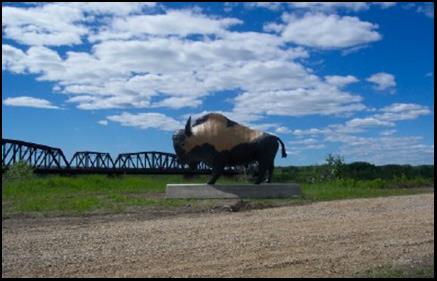
p.s. Turns out St.Louis has a pretty sweet free camp ground with water, power, and flushing toilets. They also have a giant statue of Bison antiquus (of questionable scale, but still cool).

Friday, July 17, 2009

South Branch open house

Sunday, July 25, 2009 is the South Branch House open house day. All are welcome. Be there or be square! The summer excavations at the late 17oos fur trade post site of SBH are run by the SAS and go from June through July (volunteers welcome! Hint hint!) with the SBH Fieldschool to be held from July 23rd through 26th. Come and view the twisted archaeological riddles that dwell within! Marvel at the meandering southern excavation trench and the stockade wall to nowhere! And two, count 'em TWO, sets of cellar depression/chimney mounds! Amazing!

View south branch house in a larger map

p.s. There is also a SBH geocache (for the non-muggles among you).

Tuesday, July 14, 2009

The Art of Patrick Douglass Cox

Some of you may recognize the archaeologist depicted in this painting. I think we can all agree that MP has embiggened our culture with her cromulent archaeology modeling. The piece is called "The Archaeologist", (2008, egg tempera, 21x29in, $15,800). It is available through the Masters Gallery Ltd in Calgary, which specializes in historic and contemporary Canadian art. More of Patrick Douglass Cox's work can be seen on his website here (the interesting writeup about him/his family's history on the Masters Gallery site comes from his biography page).

Increase your wordiness:
Tempera (aka. egg tempera) refers to a type of paint (or paintings done using this type of paint) made from coloured pigment mixed with egg yolk (or maybe some other glutinous water soluble binder like glue, which is used to make the tempera called poster paint). Egg tempera is very resilient and was a primary method of painting until the 15thC, when oil paints were invented.

p.s. Click here for past posts defining "embiggen" and "cromulent".

Sunday, July 5, 2009

We're Missing the Chile #16: Brasil Edition

Saludos from Brasil to all the "Chicken!" readers out there!

So this will be the first "Missing the Chile" post written by little CP herself! I am constantly reminded by big CP that the fans need their Chile, and all the spicy details (ha ha ha...chili joke... moving on). So, I am sorry for the lack of Chile postings... but i am here for the Brasil edition.

My latest adventure has been to Salvador de Bahia also known as the Capital of happiness! Salvador is the Capital of the Northeast state of Bahia. Also, an interesting little tidbit, Salvador is the third most populated Brasilian city (after Sao Paulo and Rio de Janeiro).

Salvador is very mountainous and whatever is not mountain is deep blue coastline. So beautiful! I loved it so much! One of my favorite things about the city was how it was built; how the houses and buildings were built in the mountains. It is an interesting mix of old and new, and when we drove down some of the narrow streets I could imagine the history and the start of this beautiful city.

The architecture is so beautiful! There are many sculptures, statues, and the really big elevator ! The fountain statue in the picture to the right is the "Fonte da Rampa do Mercado" ("Fountain of the Market Ramp"), which occupies the site of the old Mercado Modelo. The elevator in the left picture below is called Elevador Lacerda. It is like an elevator for a mountain that overlooked the ocean. It was huge and so interesting and it just goes top to bottom, it does not stop in the middle (and where would you go if it did?). The elevator is the first to ever be installed in Brazil (in 1873). It links the upper (Cidade Alta) and the lower (Cidade Baixa) parts of the city, which are divided by a huge escarpment some 85m high (with the cathedral and most of the buildings on the high ground and the Northwest region of the city on the lower ground near the shore). It was really, really huge!


That's all for now. Thank you Chicken! readers.

-Little CP

p.s. Archaeology nerd note (by big CP):

The Historic Centre of Salvador da Bahia was designated a UNESCO World Heritage site in 1985. It was the city's centre during the Portuguese Colonial Period, and was named for the pillory (Pelourinho) that stood in the marketplace for almost 30 years in the early 1800s. According to UNESCO: "As the first capital of Brazil, from 1549 to 1763, Salvador de Bahia witnessed the blending of European, African and Amerindian cultures. It was also, from 1558, the first slave market in the New World, with slaves arriving to work on the sugar plantations. The city has managed to preserve many outstanding Renaissance buildings. A special feature of the old town are the brightly coloured houses, often decorated with fine stucco-work" (as shown in little CP's picture).

Wednesday, July 1, 2009

Oh Canada!

The British North America Act of 1867 was proclaimed on July 1, now celebrated as Canada Day. It stated that the new Dominion of Canada would include the provinces of Ontario, Quebec, New Brunswick, and Nova Scotia at it's outset (and that others could join later...One of us! One of us!). It established the provincial (each province would have its own seat of government, lawmaking body, and lieutenant governor) and the federal (stationed in Ottawa, composed of an elected House of Commons, an appointed Senate, and a governor-general) governing bodies. This act remained in force until the Constitution Act of 1982). Canada's first federal election was held in September of 1867 with 73% voter turn out (of course eligible voters comprised only 11% of the population, being white property owning men). Sir John A. McDonald's conservatives won 101 of the 181 seats. Also on July 1st: Oh Canada was proclaimed our national anthem in 1980, 100 years after the tune was first written by Canada's national musician Calixa Lavallée (although the lyrics went through several drafts during that century).

Some Canadian History links to help with learn-ding:
- The Canadian Encyclopedia from Histor!ca
- Canada Info Link
- Map from Canadian Geographic's Historical maps section.
- Play the Canadian History Game and nerd it up hard core! Woohoo! (unfortunately you must have Civ3 or Conquests 1.22)

Thursday, June 25, 2009

We're Missing the Chile #15: Brasil Edition

New fave food: Mugunza - a dessert made with hominy. Hominy is nixtamalized maize kernals (see pic below).

CP sez "increase your wordiness":
Nixtamalization is a process by which the hull and germ (pericarp) of a grain is removed by soaking and cooking the kernel in an alkaline solution (e.g. lime water or ash solution). The process was first developed in Mesoamerica (the word actually derives from Aztec and Spanish words) some 3500 years ago for the preparation of maize and the term usually refers specifically to this activity.

FYI: While unprocessed corn is an insufficient dietary stable, a combo of nixtamalized corn and beans does a body good because the corn picks up free niacin from the processing and the beans provide amino acids and protein. Mugunza has peanuts in it (which is a legume fruit like beans) so this dessert is actually a full meal deal. Except that little cp doesn't like the version with peanuts. So basically she likes corn with coconut milk.

Fave activities: continues to be Forró. So much forró...so very tired...zzzzzzzzz...

Places visited:
-Forró Caju (2009) - a huge place for partying (Badalando). Here's a map with a bunch of crazy things attached to it.
-Fazenda Boa Luz (a resort/farm) for dancing, drinks, and carrying on. Got flowers from a weirdo. Here's another crazy map.
-"Vila do Forró" - a traditional place where we have typical food and songs.
-Went to "Fazenda Mercedes" - the uncle's farm. Good sentimental times. Lorena was mushy.
-Colégio Master and Colégio Ideal - checking out various schools with the sisters, just being proactive with the edumacation and all.

p.s. Did you know the June 12th is the Brazilian version of Valentine's day? It's called Dia dos Namorados and it occurs on the eve of the feast day for St. Anthony of Padua, one of the 3 saints celebrated during Festa Junina. Also celebrated are St.Peter and Saint John the Baptist, hence the more common name for the festival, São João (Saint John).

Saturday, June 6, 2009

Music to Archaeology by (Part II)

It seems an Indiana Jones inspired song list is warranted (by popular demand). So, here are 10 more songs about Indy (remember we already have the movie theme song (by John Williams) and the L.B. Rayne 80s spoof mentioned in the previous "Music to Archaeology by" post):

Aqua - Dr.Jones (Here you go D):

Clouxcover - Indiana Jones (a metal cover of the theme song)
Guwumpkis - The Indiana Jones Boogie (a punk version of the theme song with some hollering in it)
International Superheroes of Hardcore - Just Like Dr.Jones
The Crystal Skulls - Dr.Jones (a spoof of counting Crows' Mr.Jones)
Lemon Demon - The Ultimate Showdown of Ultimate Destiny (just for fun, because Indy gets sacked by Chuck Norris)
Venom - The Ark (this one's for Tam! An Indiana Jones song from the seminal Black Metal band, the song is from the "Tear Your Soul Apart" album)

And some Spanish songs for the little cp (I'm pretty sure they're mostly about Indiana Jones, but she'll have to double check):
PAMELA JONES - Indiana Jones
Csi - Celluloide
Hombres G - Indiana

p.s. There are a pile of songs that mention Indy in passing as a pop culture reference too (e.g. Oi to the World by No Doubt, You Dreamer by Big Country, Regional Girl by The Monkees, etc.) but I didn't count them. Also, FYI you get 177 hits on myspace if you search for Indiana Jones as a song/band title. Most appear to be techno instrumentals or offensive rap. If we filter out the junk, there are a few that are decent songs from little groups like small city (doesn't actually mention Indy until the very last line), Echoe (they're from the Poland and they're fung-kay), Vermont, or Matthew Ridenour. Note: Holy cow there are a LOT of techno songs that are called "Indiana Jones". Although most are for no discernible reason some use the theme song somehow, like Speaker Chemicals.

Monday, June 1, 2009

We're Missing the Chile #12

Travel log: Cochabamba

Fun Facts:
-The city’s name is derived from the Quechua words khocha pampa (meaning "swampy plain").

Drinky-poos:
-Famous for it's chicha (fermented maize drink).
Nerd Notes: Chicha is archaeologically widespread and has been identified using stable isotope studies (among other things) on account of corn being a C4 plant as opposed to C3 grains etc that have different stable carbon isotope ratios.

Unfortunately little cp didn't get to see a lot her first time there since she was only there for one day. But she saw the Cristo. It's like he's on the dashboard of the entire country! As well as the town square and went to the market. She got some great picks of the city too. Fun times! She intends her next visit to be more thorough.

Checklist of sites to see in Cochabamba:
1. El Cristo de la Concordia - Giant Christ statue that is situated even bigger than the Cristo del Corcovado in Rio.
2. La Coronilla: Hill with monument dedicated to the women who defended the city from Spanish forces in 1812.
3. various former residences and holdings of Simón I. Patiño (e.g. Palacio Portales and Pairumani aka. Villa Albina)
4. ubiquitous churches (most famous include the Catedral and the church at Plaza 14 de Septiembre, etc.).
5. archaeological curiosities (e.g. the Museo Arqueológico and the Casa de la Cultura).

p.s. This post was originally supposed to be up in May but was held back in case little cp went back before she headed to Brasil (so I could combine here two visits into a crazy super-post). Ah well next time.

Sunday, May 31, 2009

Music to archaeology by

Archaeology inspires a diverse playlist! Here's 50 songs related to archaeology. McShanty points if you find the bogus link to an old-timey learn and know video (Ahhh the ubiquitous flute music - I remember it from Hinterland Who's Who).

Alice in Chains-Them Bones (from the album "Dirt", note that the song "Dirt" isn't really about dirt)
Arrogant Worms - History is Made by Stupid People (FYI the Arrogant Worms actually have an album called Dirt! but none of the songs are archaeology-related)
B52s - Mesopotamia (I also like "Rock Lobster")
Bangles - Walk Like an Egyptian
Bauhaus - Hollow Hills (also the song "In the Flat Field")
Because - Archaeology
Billy Talent - Rusted by the Rain (because, you know, shovels rust if you leave them out in the rain. Also, I wanted a new song on here)
Boz Scaggs - King of El Paso (from the album Dig)
Cannibal Corpse - Buried in the Back Yard (This is about zombies and cannibalism, I just figured I had too much indy stuff on the list)
Chris Rosser - Archaeology (the album is also named "Archaeology")
Clutch - Bottoms up, Socrates
D-Tent Boys - Dig it (Holes)
Don Henley - If Dirt Were Dollars
Downchild Blues Band - Dig Myself a Hole
Godsmack - Voodoo
Greenella - Archaeology With Dynamite
Gruff Rhys - The Court of King Arthur
Harvey Dent - Archaeology Today
Honkey Dorey - Archaeology
I Mother Earth - Levitate (Album: Dig)
Jack Johnson - Traffic in the Sky
Jars of Clay - Dig
JayZ - Dig a Hole
Johnny Cash - Hurt
John Williams-Indian Jones Soundtrack (of course)
Killswitch Engage - Holy Diver (Think about it! You may remember this song from previous posts)
L.B. Rayne - Indiana Jones (Ha Ha Ha! 80's theme song. Weee!)

Mediocre Folk - Archaeology
Millennium Falcons - Archaeology
Misfits - Dig up Her Bones
Modest Mouse - So Much Beauty in Dirt (this isn't about actual dirt but I think the feeling behind it is appropriate)
Mystery School - Archaeology
Nick Cave & the Bad Seeds - Dig! Lazarus! Dig! (crazy song, mostly not at all about digging, but I like it anyway)
NOFX - Dig
Paper Lions - Bones
Peter Gabriel - Digging in the Dirt
Popacatepetl - Archaeology
Randy Travis - Diggin' Up Bones (Ha! Just like at the track!)
Red Hot Chili Peppers - I Like Dirt (We want Chilly Willy!)
Skinny Puppy - Dig It (weird song with an incomprehensible video, but it repeatedly commands you to dig so it's OK)
Spinal Tap – Stonehenge (In ancient times, hundreds of years before the dawn of history...)
Steve Cruickshank - Archaeology
Steve Earle - Way Down in the Hole (I love this song so I put it on, even though it is more about putting Satan into holes rather than digging/taking things out of said holes)
The Hidden - Archaeology
The Mock Turtles - Can You Dig It?
The Problems - Archaeology
Thunder Lords - I Like Dirt (Unlike the Chili Peppers song, this one is actually about liking dirt)
Wintersleep - Archaeologist

I Want to Marry an Archaeologist from the old computer game Laura Bow II:

p.s. There are artists out there who have engaged in archaeology and then wrote songs about it (like this guy).
p.p.s. Also, here's some bands, albums, and/or songs named archaeology (but actually have nothing to do with archaeology): Archaeology (album: Archaeology), Archeology (album: Change of Address), Pop Archeology Transmission (album: It Is What It Is), Archaeology (album: Booming Fiction), Mike Gibbons (album: Archeology), The Rutles (album: Archaeology), Thinking Machines (album: A Complete Record of Urban Archaeology). Also, the song named "Archaeology" by artists Salt Shaker, Dj Spooty, Lennie Buck, Mike Shorthouse Experience, Abortive Gasp, or Grumblefish. Further, I omitted an abundance of instrumental jazz, classical, experimental, electronica, etc. songs that have no lyrics, so I wasn't sure how they related to archaeology per se other than having an appropriate title like "Archaeology" or variations thereon (e.g. by National Boulevard, Charlie Reinertsen, the Rob Brown Trio, Roberto Anselmi, Chinese Puzzle, Lafayette, Wilgira, Shitmat, Indoor Life, People Of Water, etc.) Forbidden Archaeology's self-titled album. Also, curiously quite a few electronica bands have albums named "Artifacts".

Saturday, May 16, 2009

Fish Bones

Ha Ha Ha! It's funny because it's true! Every zooarchaeologist has at least one moment like that. Watch this nerdtastically hilarious short film loosely based on events that led to this article:
Porcasi, J. F. and S. L. Andrews. 2001. Evidence for a prehistoric Mola mola fishery on the southern California coast. Journal of California and Great Basin Anthropology 23:51–66.

Friday, May 15, 2009

We're Missing the Chile #10

In which we continue our recounting of little cp's adventures in Argentina. Sites seen in Buenos Aires:
1. La Boca - Little cp's favorite part! Colourful buildings, restaurants with live tango dancers, musicians playing sambas in the streets...What's not to like? Some musicians just walked into the restaurant little cp was eating at and started playing! Then some customers started dancing! Good times! Also, saw some street dancers doing national dances and walked along the Calle Caminito.

Scenes from La Boca:


2. La Recoleta Cemetery - Interesting and large cemetery in upscale district. Click here for a walk through. Some of the tombs had been broken into. One had a cat living in it! Mostly famous for being the final resting place of Eva Peron.

Historical Note: The life of the much loved, much popularized Eva Peron is interesting and fraught with political and personal strife, but I'm not going to talk about that because we're talking about the cemetery (focus people!). More appropriate to the topic at hand is the crazy story of what happened to her after she died. After her death in 1952, the corpse was embalmed and put on display at the headquarters of the General Confederation of Labor (many thousands of admirers would come from far and wide to see her, light candles, hold vigils, and other fun Catholic things). It was due to the meticulousnes of her embalmer, Pedro Ara, that the body managed to stay in such pristine condition, potentially forever (he even preserved the body with all its internal organs, which are normally removed). Apparently he was going for Lenin-quality preservation...it took him a year to accomplish. Anyway in 1955, the military leaders who overthrew Juan Peron confiscated Eva Peron's corpse because they were afraid that the opposition would use the body to rally the populace. Since the body was such a powerful symbol (for the nation's poor especially) they couldn't just destroy it or they would risk massive repercussions. So they tried to hide it, but they were never able to keep it totally hidden/secret from locals, who would bring flowers and other offerings. This was in spite of trying to trick people by employing multiple wax replicas of the body that Pedro Ara had made. One story goes that, after many stays in various and sundry military installations in Buenos Aires, the body was taken to the house of an army major who stored it in his attic. But (and this goes to the legend of Eva's haunting of Argentina/her corpse/her resting place), the major mysteriously shot his wife and so the body had to be moved again. The military decided to send the body to a secret site in Italy where it was buried under the name "Maggi"(this was in '57). Juan, who had been exiled to Spain, managed to recover it in 1971 in exchange for granting his blessing to the new Argentinian regime of the day. He stored it in an open casket in his house! Far from being weirded out by this, his then wife Isabel performed daily devotions and even combed it's hair. Peron was re-elected in 1974 but promptly died and Isabel went back to Argentina to succeed him as president and brought Eva with her (persumably to lend support to her presidency). The body stayed at the presidential estate until 1976 (when Mrs. Peron was overthrown) when it was finally buried in the Duarte (Eva's maiden name) family tomb in the Recoleta Cemetery. She lies in a glass case 6 metres underground, surrounded by bank vault-esque steel plates. Whew!

3. Casa Rosada - President's house. Pink-coloured because mixed white and red (the conservative and liberal colours).

4. Obelisco - The Obelisk of Buenos Aires, built in 1936 to commemorate the 400th anniversary of the city's founding.
Fun things to do with your Obelisk:
-acrobatic highwire acts
-hang signs geared at silencing the masses
-celebrate football wins
-put a giant pink condom on it
-dress it up like a pencil in remembrance of la Noche de los Lápices.

5. Floralis Generica - giant metal sculpture of a flower made by architect Eduardo Catalano in 2002. It is 23 metres tall and has a mechanism inside that opens the 6 petals in the morning and closes them at night. Cool! It is located in the Plaza Naciones Unidas (behind El Museo Nacional de Bellas Artes).

6. El Museo Nacional de Bellas Artes - The National Fine Arts Museum houses some of the most important art pieces in South America. Showcases important pre-20th Century works from all over the world (and the occasional contemporary artist). I don't know much about art but they have a Monet that I recognize from that Monet coffee table book my parents have. I dunno, you could spend days there looking! Also the building has an interesting history...

7. Museo Nacional de Arte Decorativo - Spitting distance from #5 and #6. Cool museum with a grab bag of fancy pants decorative art from furniture to porcelain housed in what was once one of the country’s grandest single-family homes in the early 20th century.

Personal observations:
-So many plazas! San Martin (of course), Chile, Uruguay, Francia, Republica, etc. Also there are so many museums in Buenos Aires! Too many things to see in a day! Sensory overload!
-Saw a local dance troupe doing capoeira. Neat.
-Buenos Aires has amazing ice cream!
-The wealth disparity in the city is clearly evident in it's slums with hole-ridden buildings and people begging for change to live. Upsetting and makes you appreciate how much we have in Canada.

FYI: Italian connections:
Did you know that Argentina has a significant Italian/Italian ancestry population? It's true! Italians formed a significant portion of the immigrant population to Argentina since the late 1870s (although the flow has stemmed in since the 1960s). Many features of Italian culture have permeated Argentinian culture such as customs and food (resulting in the many many Italian inspired, Argentinian fusion restaurants). If Wikipedia is to be believed, Argentina has 1.5 million Italian speakers and 60% of Argentinians have some sort of Italian ancestry. Hmmm...coincidence that little cp like this place so much?

p.s. Check the detailed map below and see if you can find the places mentioned (click to embiggen).

 
Creative Commons License
What the ?! ..... Chickens! by CP is licensed under a Creative Commons Attribution-Noncommercial-No Derivative Works 2.5 Canada License.