Sweet zombie Jeebus! Little cp better keep on her toes if she goes back to Argentina! The gnome sightings in Argentina are apparently part of a chupacabra-esque craze that came to its climax in 2007-2008. The story was reported by El Tribuno in Argentina, then The Sun in the UK, and then picked up by Fox News. There is of course the usual he said/she said back and forth that surrounds all urban legends, with skeptics saying reports of the extremely high percentage of locals that belive in or have seen the creature are unverified (which is true) or exaggerated (which is probable) and that the video or photographic evidence is faked (which is easily done). However, locals have apparenlty reported seeing gnomes (or duendes) for several decades already, but reports of sightings vastly increased in 2007 after some railway workers reported seeing one running around the tracks.
Argentinian teens shot this video of the infamous "creepy gnome", whch is the most well known evidence. And it struck again in Clodomira, province of Santiago del Estero, Argentina!
p.s. This post is in lieu of a We're Missing the Chile!:Epilogue post that may never come from little cp (hint hint). Be forewarned! I will continue to post creepy things like this about your beloved South America if my demands are not met!
I drew up some plans for some large excavation screens I made. I went uber-low tech and drew them in Paint too (it's easier than you'd think once you figure out your scale lines). The plans are also in the latest issue of the SAS Newsletter so they're even published (kind of). The reason I put these up here is because my first instinct when I was going to build new screens was to look for wood working plans on the interwebs. But to no avail because the best I could do was a plan for a tank-like shaker screen (but I wanted ones to be hung from from a tripod, hammock style from two trees, or what have you). So I thought I would do my social duty and post my plans here for other archaeology types to try (click to embiggen). They also work for geology soil sifters or compost sifters. Hey and if anyone out there downloads/uses the plans please leave a comment, I'd be interested to know if my social work was useful.
p.s. I put metric measurements because I don't care what the lumber industry says dang it (What are we? In the time of Charlemagne!?). But, since board types are named for their imperial height and width measurements (and S4S boards are subsequently finished to slightly less than that), you can check the "Did You Know?" box for S4S board dimension conversions.
Part 2 of this year's Shakespeare on the Saskatchewan festivities. One of the most commonly performed comedies of all time is Midsummer Night's Dream. It is not really known when exactly this play was first written but it was probably some time in the mid 1590's. The SotS took a 20s(ish) take on it with colourful suits and jazzy songs and all of the characters were in the military. Delightful.
This play features three interlocking plots sandwiched between opening and closing scenes relating to the celebration of the wedding of Theseus of Athens and the Amazonian queen Hippolyta. Primarily, we have the love quadrangle between Hermia, Lysander, Helena, and Demetrius. Hermia and Lysander are in love but Hermia's father Egeus wants her to marry Demetrius. Demetrius loves Hermia but she doesn't love him and Hermia's best friend Helena loves Demetrius but he doesn't love her. What jolly farce! We also have the story of Oberon and Titania, the fairy king and queen. They are in town for Theseus and Hippolyta's wedding but are estranged because Titania won't give her page-boy to Oberon to be his minion because the boy is the son of one of her peeps who died. Oberon wants to go upside her head for being so feisty so he gets his henchman Puck to get him a love flower so he can make Titania fall in love with something or other and become too distracted to care about her page-boy any more (and also to be used to sort out the four aforementioned fools who are by now chasing each other through the forest at night). This leads us to the third story, that of the "mechanicals" (laborer/peasant folk) who are to put on the play-within-a-play about Pyramus and Thisbe that is to be the entertainment at Theseus and Hippolyta's wedding. While rehearsing, one of the mechanicals, Nick Bottom, shows himself to be an ass and Puck decides to transform Nick's outsides to reflect this and points him at Titania (who was hepped up on love flower by this point). And bestiality ensued. Eventually, once Oberon gets what he wants, he gets Puck to put everything back to normal except that Demetrius is now in love with Hermia so all is well and all the couples get married and the mechanicals perform their play (badly) and there is much rejoicing. The end.
Now, let's talk historical references shall we:
This play draws on both Greek (Theseus and Hippolyta) and Roman (Pyramus and Thisbe) mythology. He was fathered by the Athenian king Aegeus (as in Aegean Sea, see: Minotaur myth re: throwing himself into the ocean) and Poseidon. Interestingly, this idea reflects the Greek understanding of reproduction at the time as they believed the mixture of semen from the two fathers would give rise to a son with characteristics of both. Theseus is also featured in the lesser known Shakespearean play "The Two Noble Kinsmen". In mythology, Theseus does marry Hippolyta, the Amazonian queen he meets and kidnaps in while traveling with Hercules. However, in some stories it is not Hippolyta, but her daughter Antiope that he abducts and marries. Being an Amazonian gave Shakespeare licence to have Hippolyta talk back to Theseus so forcefully during the play (actually Midsummer Night's Dream is touted as having very strong willed female characters throughout). Anyway, of course this caused a big ol' war between the Amazons and the Athenians. The Amazonians lost because they failed to reckon with the fact the Athenians had two demigods on their side (Duh!). He later ditched Hippolyta (or she may have died) once he became King, for Phaedra who was the daughter of King Minos. Theseus is most famous for defeating King Minos' minotaur in Crete (with Phaedra's older sister Ariadne's assistance) when he was a princely whipper-snapper. But, Phaedra falls in love with her son-in-law Hippolytus, Theseus' son by Hippolyta. In Euripides' play "Phaedra", Phaedra sends her slave to tell Hippolytus how she feels, but he is shocked and appalled by the news (he's chaste don't you know). Phaedra then accuses Hippolytus of rape, Theseus has Hippolytus killed, and Phaedra kills herself not necessarily in that order, and in some versions of the story she doesn't commit suicide at all).
The story of the star-crossed lovers, Pyramus and Thisbe, is from the Roman poet Ovid's epic narrative poem Metamorphoses (the 15 books of this collection of relatively unrelated tales of love, seduction, and history were completed in 8 AD). Among other things, this story explains why mulberries are red. Shakespeare liked this story so much he based Romeo and Juliet on it (which he is thought to have written around the same time as Midsummer Night's Dream). Shakespeare also took the name "Titania" from Metamorphoses, as it was the name given to the daughters of titans. Before this, traditional folklore held that the fairy queen remained nameless. Oberon, however, dates back to 13th century french literature as a fairy dwarf in the "chanson de geste" (transl. Old French - songs of heroic deeds) "Les Prouesses et faits du noble Huon de Bordeaux". As in many fairy tales, this one finds our hero charged with completing various impossible tasks for whatever reason (usually princess related), which he is only able to accomplish because early on in the story he was nice to a magical thing of some sort, in this case a magic dwarf. Other likely candidates for helpful things to befriend in such scenarios include: old people (especially crones), talking animals (also preternaturally smart but mute animals), things that are trapped inside of other things, water creatures that like music (only to be attempted if you have some sort of musical instrument handy), and deceptive earthly incarnations of deities. So keep an eye out for those.
You may remember Shakespeare on the Saskatchewan from past posts (Twelfth Night, The Tempest). The Tragedie of Anthonie, and Cleopatra was first published in the "First Folio" in 1623 (see right, click to embiggen). It is set in Rome/Egypt in 40–30 B.C. and follows the love affair and downfall of Mark Antony, one of the triumvirs of Rome, and Cleopatra VII, the last pharaoh of Egypt's Ptolemaic dynasty.
"Mark Antony is Rome’s most honored soldier; Cleopatra is Egypt’s most beautiful queen who captures his love. Their passion blazes with infinite fire but makes Antony compromise his responsibilities to Octavius Caesar and Rome. To solidify political relations Antony must marry Octavius’s sister; but when he is lured back by Cleopatra’s mesmerizing charm, battles rage; Antony must choose between passion and honour. Antony and Cleopatra is a heart wrenching tragedy that will conquer our stage and your heart this summer."
Personally, I appreciate the more mature tragic romance of this story than of something like Romeo&Juliet (whom I always felt were idiots). Both the main characters are big (and often flawed) personalities and they have burdens and responsibilities and life experience behind their decisions and influencing the courses they take. Good times.
And now for some fun things to learn and know about Cleopatra VII and her whole deal:
-The degree of inbreeding in the royalty of Ptolemaic dynasty was so great that Cleopatra VII only had four great-grandparents and just six great-great-grandparents (four of which were descended from the other two). Click here for a Ptolemaic genealogy. -Although Cleopatra is rumored to be the only pharaoh of this dynasty to speak Egyptian, her time was during the Hellenistic period in Egypt and so her main language would have been Greek (the Ptolemies ruled for about 300 years from 305 BC to 30 BC when Cleopatra committed suicide). -Cleopatra's father, Ptolemy XII, died in March 51 BC leaving 18-year-old Cleopatra and her brother, the 12-year-old Ptolemy XIII as joint monarchs. Due to economic and political strife and Cleopatra's ambition, trouble a-brewed until she was ousted and sent into exile in 48BC. Later, Ptolemy screwed himself over by having Pompey assassinated in a misguided attempt to gain favour with Julius Caesar (with whom Pompey was embroiled in a losing military conflict) when he sought refuge in Alexandria. Cleopatra was quick to take advantage of Caesar's bilious humours regarding Ptolemy, so she had herself rolled up in a carpet and delivered to the Caesar. She had to do this because Caesar's palace was on lock down and she wouldn't have been able to walk in the front door. Anyway, apparently Caesar thought that was pretty cool and nine months later Cleopatra gave birth to their son Caesarian in 47 BC (Caesar was 52 and Cleo was only 21 when the two met). This also led Caesar to abandon his plans to annex Egypt and instead he backed Cleopatra in her attempt to recapture the pharaoh-ship (which she succeeded in doing after 6 months of war and the subsequent drowning of Ptolemy XIII in the Nile). Although this time she had to share with another younger brother, Ptolemy XIV. -Once Julius was assassinated in 44BC, Cleopatra returned to Egypt with her son and brother where Ptolemy XIV came down with an unfortunate bout of poisoning. She then aligned herself with Mark Antony in opposition to Octavian (who was Julius Caesar's legal heir which made Cleo mad because she had hoped that Caesarion would be heir, being Julius's actual son, if illegitimate). She also had Mark behead her sister. -Mark and Cleo spend the winter of 41BC together in Alexandria, then she gave birth to their twin children Alexander Helios and Cleopatra Selene II. Four years later, Antony returned to Alexandria while en route to slaughter the Parthians. He got Egyptian married to Cleo around this time (which made a lot of Romans mad because he was married to Octavian's sister Octavia too) and they had another baby, Ptolemy Philadelphus. -Then some other stuff happened (i.e. war with Octavian, Cleo turning tail and running during battle, Mark Antony following her, etc.) and she committed suicide soon after Mark added some speed holes to his own torso. Famously, she did this by inducing an asp to bite her on the arm (although Shakespeare says it bit her on the breast, probably for shock value...or artistic license whatever). While this seems melodramatic of both of them (and it was), they were probably going to be executed by Octavian for all of their tomfoolery anyway so it's not like the pulled a Romeo & Juliet or anything.
"Nihilism" courtesy of xkcd.com comics by Randall Munroe.
p.s. If you're curious about the fine print at the bottom of the xkcd page, here's what it says (I don't get it):
We did not invent the algorithm. The algorithm consistently finds Jesus. The algorithm killed Jeeves. The algorithm is banned in China. The algorithm is from Jersey. The algorithm constantly finds Jesus. This is not the algorithm. This is close.
The 1991 NFB of Canada animated film based on the song of the same title, written and sung by Canadian folk singer Wade Hemsworth about his personal experience surveying in Northern Ontario, with back-up vocals by Kate and Anna McGarrigle. Recently recounted to the field school peeps camping at St.Louis last week.
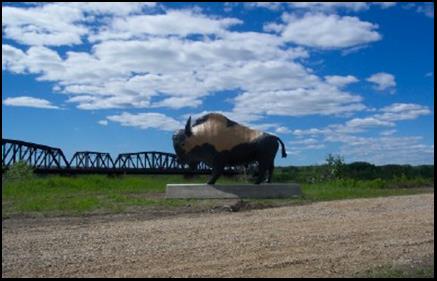
p.s. Turns out St.Louis has a pretty sweet free camp ground with water, power, and flushing toilets. They also have a giant statue of Bison antiquus (of questionable scale, but still cool).
Super fun camping times at Baldy Lake. Located in Narrow Hills Provincial Park, a lovely little lake with a very low smeatness ratio. Also, went on the challenging version of the Gem Lakes hike (apparently). Some nice lakes that were pretty (although not as trippy as advertised).
Sunday, July 25, 2009 is the South Branch House open house day. All are welcome. Be there or be square! The summer excavations at the late 17oos fur trade post site of SBH are run by the SAS and go from June through July (volunteers welcome! Hint hint!) with the SBH Fieldschool to be held from July 23rd through 26th. Come and view the twisted archaeological riddles that dwell within! Marvel at the meandering southern excavation trench and the stockade wall to nowhere! And two, count 'em TWO, sets of cellar depression/chimney mounds! Amazing!
Now for more Brasilian doings straight from the little Cp's brain to your eyes.
Sites seen and purchases purchased: - Capoeira - in the streets. It was cool. The instruments are played in a row called the bateria. The rhythm of the bateria is set by the berimbaus (stringed percussion instruments that look like muscial bows). Other instruments in the bateria are: two pandeiros (tambourines), a reco-reco (rasp), and an agogô (double gong bell). The atabaque (conga-like drum), a common feature in most capoeira baterias, is considered an optional instrument, and is not required for a full bateria in some groups. -Cuíca - "you know in the samba music that goes squicky-squickey-squickey, it is the instrument that does that" - bought bikini at Bumbum (hahaha), a fancy bikini boutique.
Fruits tried: -obvious ones include manga (mango), abacaxi (pineapple), passionfruit ("maracuja" is passionfruit), and guava ("goiba" is really good and it is a common pop flavour) -dragon fruit (maybe) and possibly guanabana while in Bolivia (check this post for notes on guanabana) -acai, it's a berry. ya i ate that. it is ok, not great but meh -acerola, ya i ate that too, but i do not remember what it is, but i remember i liked it -caju I haven't tried yet (it's where brazil nuts come from), but i have seen them (see photo) and they are cute - caja is good - mangaba -pinha is one of my favouites...it reminds me of an alligator
Some of you may recognize the archaeologist depicted in this painting. I think we can all agree that MP has embiggened our culture with her cromulent archaeology modeling. The piece is called "The Archaeologist", (2008, egg tempera, 21x29in, $15,800). It is available through the Masters Gallery Ltd in Calgary, which specializes in historic and contemporary Canadian art. More of Patrick Douglass Cox's work can be seen on his website here (the interesting writeup about him/his family's history on the Masters Gallery site comes from his biography page).
Increase your wordiness: Tempera (aka. egg tempera) refers to a type of paint (or paintings done using this type of paint) made from coloured pigment mixed with egg yolk (or maybe some other glutinous water soluble binder like glue, which is used to make the tempera called poster paint). Egg tempera is very resilient and was a primary method of painting until the 15thC, when oil paints were invented.
p.s. Click here for past posts defining "embiggen" and "cromulent".
2009 is the 80th anniversary year of the first publishing of the book "Red Harvest". This was author Dashiell Hammett's first novel and arguably one of the most influential works of American literature of the 20th century. Hammett was also the author of such books as "The Maltese Falcon", which gave rise to the character of Sam Spade the hard-boiled private eye - sometimes confused with his contemporary Raymond Chandler's Philip Marlowe character, which is understandable because they were both played by Humphrey Bogart ("The Big Sleep" is also considered a seminal work of American 20th century fiction). Anyway, Red Harvest started the gangster novel genre and blurred the lines of mystery and detective/crime fiction. While employing Western elements, he painted his characters in shades of grey, which contrasted sharply with the stereotypical white hat/black hat western mentality. And it was the originator of the pervasive "man with no name" antihero archetype and the plot device of the hero playing both sides to achieve his ends (and coming out victorious, but a little the worse for wear). This book gave rise to many influential movies including Akira Kurosawa's "Yojimbo", Sergio' Leone's "Fistful of Dollars", and the 1996 Prohibition era period film "Last Man Standing" (to which Kurosawa contributed his writing talents).
Name related ramblin's: Red Harvest is also a decent Norwegian heavy/industrial metal band. And it's the title of the second album by the alternative metal band Bloodsimple (who clearly read the book because "blood simple" is a quote from the last line). I like them, they're vaguely Metallica-y and Godsmack-ish. "Blood Simple" is also the title of the neo-noir crime thriller that was the Coen brothers' directorial debut. The term describes the addled mindset in which people find themselves after periods of prolonged immersion in violent situations. The film is lesser known but it did make Bravo's list of film's 100 scariest moments.
Six degrees of Bruce Campbell: Did you know Joel Coen also worked as an editor on Evil Dead? It's true. He also worked on Spies Like Us (1985) with James Daughton who was in Animal House with Kevin Bacon! Hahaha! Bacon number of 2! Click here for the Bacon Oracle, which can be used to connect anyone to anyone in the movies. It's default setting is Kevin Bacon but I think I'm going to start connecting people to Bruce Campbell just because mentioning Evil Dead just now reminded me of him (in fact I may make this into a sub-section called Six degrees of Bruce Campbell...there I did it). Let's see... Dashiell Hammett wrote The Maltese Falcon, which was made into a movie starring Humphrey Bogart who was in Deadline - U.S.A. (1952) with Dabbs Greer who was in Sundown: The Vampire in Retreat (1990) with Bruce Campbell! Booyah!
Saludos from Brasil to all the "Chicken!" readers out there!
So this will be the first "Missing the Chile" post written by little CP herself! I am constantly reminded by big CP that the fans need their Chile, and all the spicy details (ha ha ha...chili joke... moving on). So, I am sorry for the lack of Chile postings... but i am here for the Brasil edition.
My latest adventure has been to Salvador de Bahia also known as the Capital of happiness! Salvador is the Capital of the Northeast state of Bahia. Also, an interesting little tidbit, Salvador is the third most populated Brasilian city (after Sao Paulo and Rio de Janeiro).
Salvador is very mountainous and whatever is not mountain is deep blue coastline. So beautiful! I loved it so much! One of my favorite things about the city was how it was built; how the houses and buildings were built in the mountains. It is an interesting mix of old and new, and when we drove down some of the narrow streets I could imagine the history and the start of this beautiful city.
The architecture is so beautiful! There are many sculptures, statues, and the really big elevator ! The fountain statue in the picture to the right is the "Fonte da Rampa do Mercado" ("Fountain of the Market Ramp"), which occupies the site of the old Mercado Modelo. The elevator in the left picture below is called Elevador Lacerda. It is like an elevator for a mountain that overlooked the ocean. It was huge and so interesting and it just goes top to bottom, it does not stop in the middle (and where would you go if it did?). The elevator is the first to ever be installed in Brazil (in 1873). It links the upper (Cidade Alta) and the lower (Cidade Baixa) parts of the city, which are divided by a huge escarpment some 85m high (with the cathedral and most of the buildings on the high ground and the Northwest region of the city on the lower ground near the shore). It was really, really huge!
That's all for now. Thank you Chicken! readers.
-Little CP
p.s. Archaeology nerd note (by big CP):
The Historic Centre of Salvador da Bahia was designated a UNESCO World Heritage site in 1985. It was the city's centre during the Portuguese Colonial Period, and was named for the pillory (Pelourinho) that stood in the marketplace for almost 30 years in the early 1800s. According to UNESCO: "As the first capital of Brazil, from 1549 to 1763, Salvador de Bahia witnessed the blending of European, African and Amerindian cultures. It was also, from 1558, the first slave market in the New World, with slaves arriving to work on the sugar plantations. The city has managed to preserve many outstanding Renaissance buildings. A special feature of the old town are the brightly coloured houses, often decorated with fine stucco-work" (as shown in little CP's picture).
Go figure! Apparently I'm harder core than I thought. The rating works by searching for random key words like "dead", "sex", etc. and must compare it to total word count or something. I assume it's something like this because if I just rate the recent posts, the blog is rated R (the Evil Dead post puts me over the edge there I think) and flags "sexy" as a bad word and if I rate the entire blog it doesn't. Anyway, click the image to rate your own blog (just change the address in the box). It's set to my blog now and will update every time you click it (because I used the method below) so my bad word counts are only going to go up. Woohoo!
Here's a compiled bad word list (from the few searches I did to see if the results would differ). Ironically this post upped my bad word counts so this list is invalid now (there's at least 4 bad words in the first paragraph alone!). In my defense all of those cocks were referring to roosters (oh wait there's another one):
Like I said, I set it up so it would rate the entire blog including archives (not just the recent displayed posts). To display all of your posts (for Blogger) just type in your http address followed by: /search?max-results=N where "N" is the number of posts you want displayed. So mine might look like: http://chickensinsaskatoon.blogspot.com/search?max-results=1000 This works for backing up your blog too, just type that in and save the webpage (this might take a while if your blog is big). You can find out how many posts you have from the Dashboard (F.Y.I. I have 339 as of today).
The British North America Act of 1867 was proclaimed on July 1, now celebrated as Canada Day. It stated that the new Dominion of Canada would include the provinces of Ontario, Quebec, New Brunswick, and Nova Scotia at it's outset (and that others could join later...One of us! One of us!). It established the provincial (each province would have its own seat of government, lawmaking body, and lieutenant governor) and the federal (stationed in Ottawa, composed of an elected House of Commons, an appointed Senate, and a governor-general) governing bodies. This act remained in force until the Constitution Act of 1982). Canada's first federal election was held in September of 1867 with 73% voter turn out (of course eligible voters comprised only 11% of the population, being white property owning men). Sir John A. McDonald's conservatives won 101 of the 181 seats. Also on July 1st: Oh Canada was proclaimed our national anthem in 1980, 100 years after the tune was first written by Canada's national musician Calixa Lavallée (although the lyrics went through several drafts during that century).




 The Order of the Hand will rule!